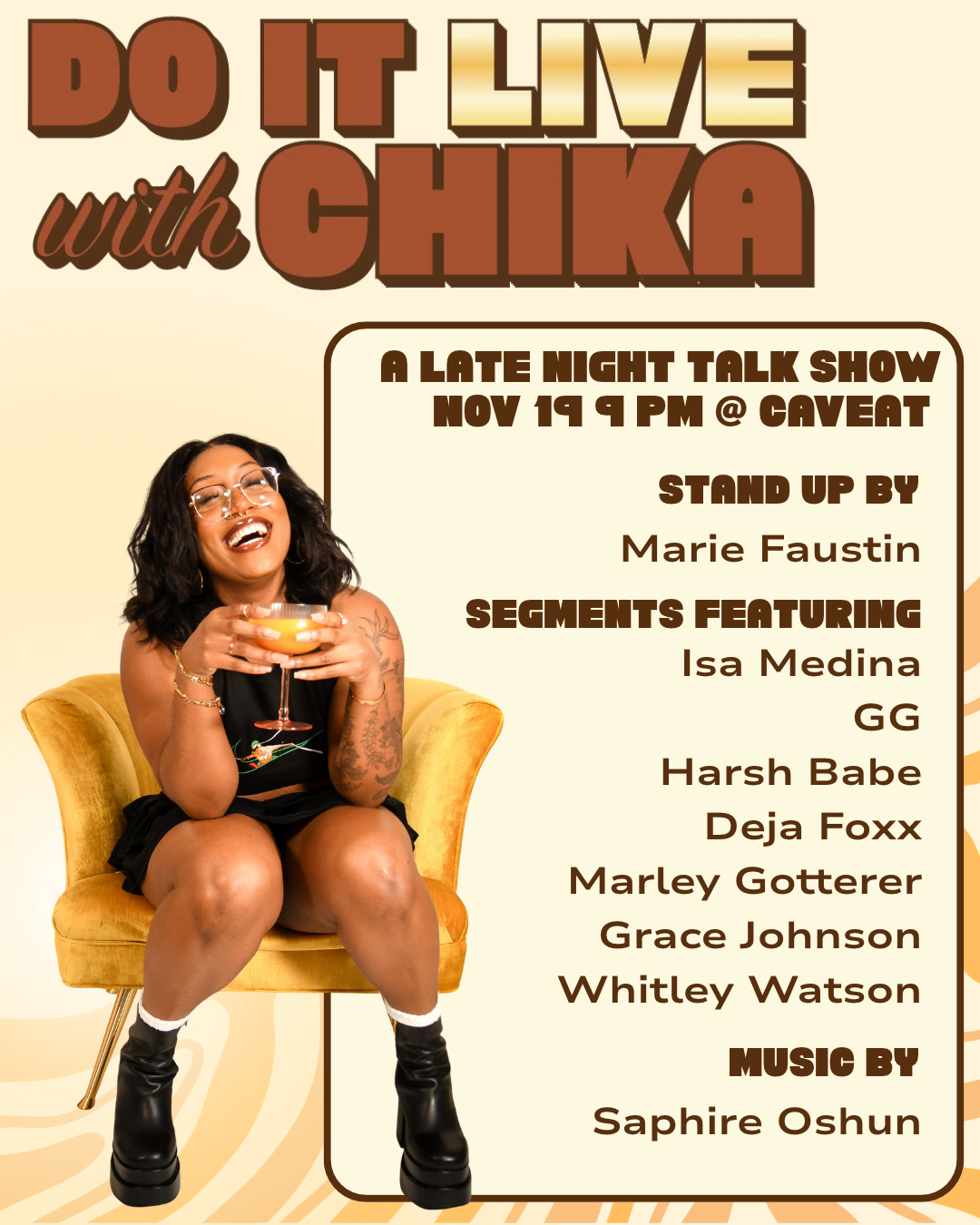
Over a satisfying lunch at the Ludlow House courtyard, Culture Riot's Editor Nikki sat down with Chika “The Woke Wendy Williams” for an expansive and fun interview about inspiration for her live late night show, the future of media and the evolution of stand up comedy after the Pandemic.
(Interview has been edited for conciseness and clarity)
Editor Nikki: Welcome, Chika. Thanks for meeting with Culture Riot. I'm super excited to talk with you because I went to your show and it was amazing. I loved the energy, it was so funny, and you had all this great, cool talent. I hope you take this as a compliment, but it felt like what the vibe would be if Issa Rae did a New York show.
Chika: Of course it's a compliment!
Editor Nikki: That’s really what it felt like being there—it felt so fresh and new. Now, anyone cool enough to hang with you probably isn't scrolling LinkedIn like me, but when I’m on LinkedIn, there’s so much doom and gloom about the media landscape. We just saw all the layoffs at local news stations, Scripps, Disney, and Condé Nast—companies saying they can’t make money. Tell me how you feel about what’s happening in media right now and where things are going.
Chika: I feel like I’ve lived a lot of lives and dabbled in a lot of different forms of media. I have a background in journalism. During the pandemic, I was writing and pitching random places to build a little portfolio because I thought I wanted to be a staff writer. I started applying to all these outlets, and as I was applying, I kept seeing layoffs happening everywhere. I thought, How am I going to get my first writing job when they’ve just laid off all these super talented writers? That was my peek into how traditional and print media were changing.
Then I started doing comedy and thought, This is so exciting, I love performing. Soon after, that landscape started changing too because of the "reel-ification" of stand-up. Suddenly, you weren't really considered a stand-up comedian or comedy writer unless you posted online and had a huge platform. Instead of submitting packets to a late-night show, the question became, "How many followers do you have?" I watched the industry consolidate down to a handful of companies, while simultaneously requiring at least 100,000 followers just to get in the door.
Editor Nikki: How do you feel about that? When people come out of that algorithm-driven system, there’s often a question of whether they’re actually funny and talented or if they just have a lot of followers—and we know there are a lot of bots out there.
Chika: Exactly. I started comedy post-pandemic, and so did a lot of comics working right now who got their start on TikTok during the 2020 boom. Comics who started pre-TikTok had to get their reps in—going to open mics for months or years, doing bar shows, performing for four people. That is how you get good at comedy.
Post-pandemic, nobody could perform live in public, so people built massive online platforms without ever stepping onstage. Suddenly, they were getting booked on live shows without ever having to sit at an open mic for three hours just to tell three minutes of jokes, or perform at a random bar for five people who literally don't want to hear you. You get good at comedy by doing it live, and once you're good, you get booked on bigger things. A whole class of comics got to skip honing the skill and went straight to performing for large audiences. Sometimes they're good and adapt, but a lot of times they haven't built that muscle for live performance.
It also shifts the threshold of what "good comedy" is. When audiences already recognize you from TikTok, they show up already in your favor—you don't have to work as hard for a laugh. So you're caught in a tough spot: it's harder to break in without being online, yet spending all your time chasing the internet takes time away from actually getting good at the craft.
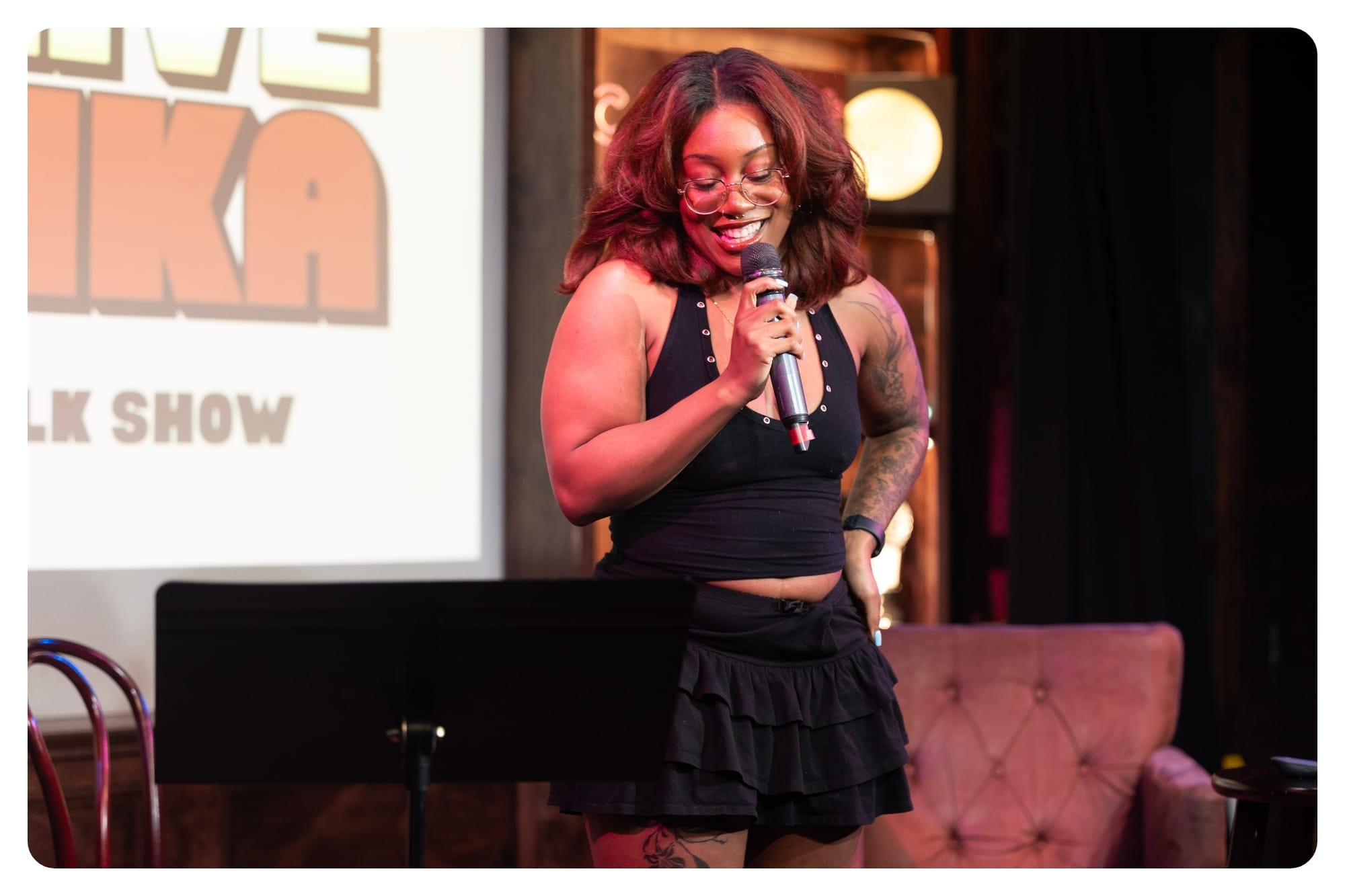
Editor Nikki: So once things opened back up, you jumped straight into performing live?
Chika: Yes, I started comedy in 2022 and I was out every single night. Those first few weeks and months I was so nervous, but once I got over that, I realized how much I loved performing. Then I started feeling pressure to clip my stand-up and post reels. I posted one, got almost no views, and felt terrible about myself—even though the live performance itself had gone great and people were laughing! I let the lack of online metrics make me feel bad about a great live set.
Editor Nikki: You realized they were two completely different animals.
Chika: Completely different. Looking into a camera and constantly posting clips online just isn't where I want to invest my energy. I would much rather be performing live.
Editor Nikki: How did that lead to creating Do It Live with Chika?
Chika: It came from wanting to do live stand-up and produce my own show, combined with looking at podcast culture—all the endless "hot takes" and debates over who splits the bill on a first date. Even legacy radio shows like The Breakfast Club, which hold an important audience, can feel overly incendiary at times. I wanted to create a space where we can have the cultural and political conversations we should be having, because the internet is not the place to have them. Blending that with comedy gave me a way to host meaningful conversations without the insufferability of the internet.
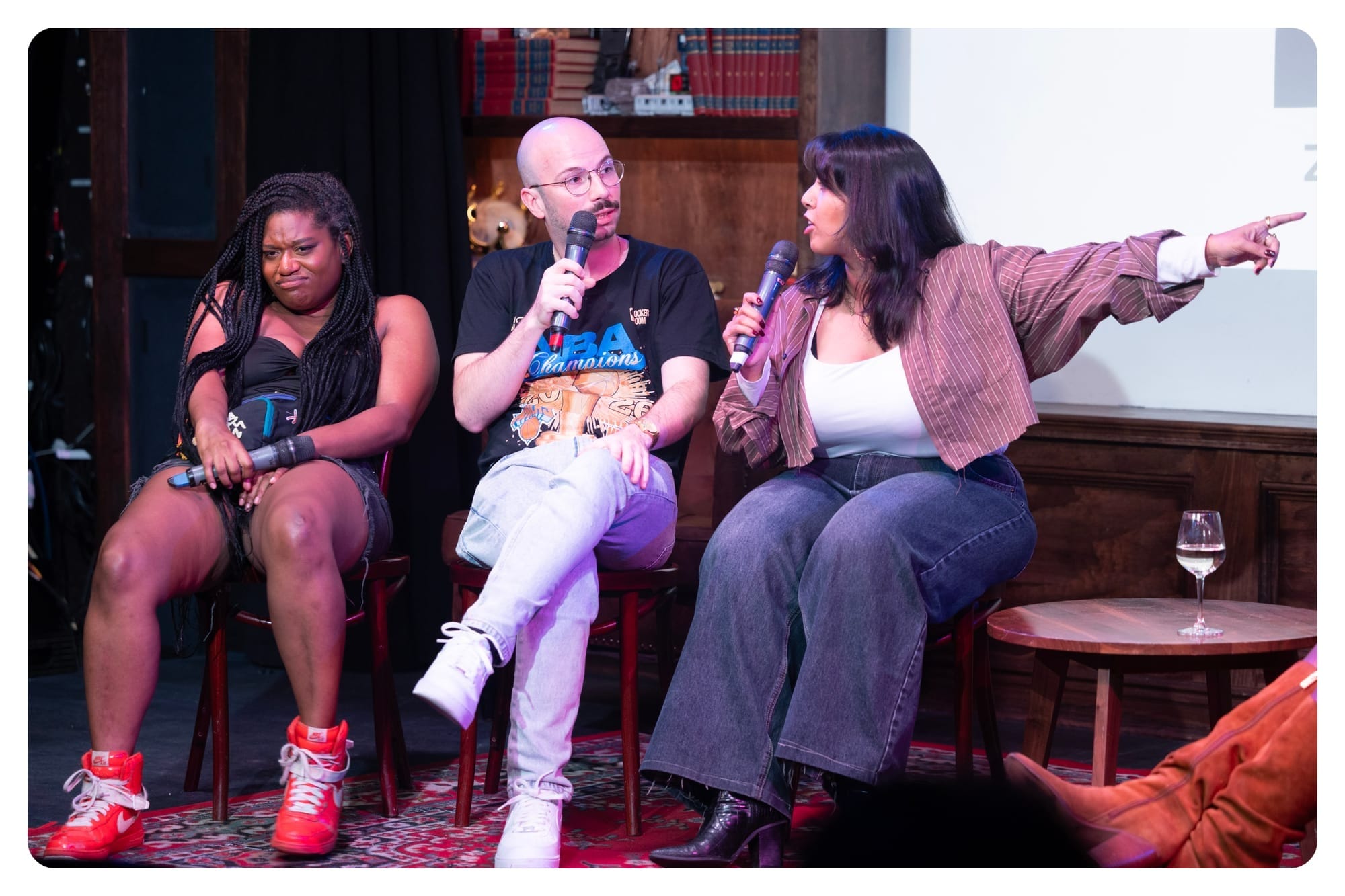
Editor Nikki: I love that. Especially in this weird era where late-night hosts like Jimmy Kimmel say something and suddenly face lawsuits or network backlash.
Chika: Right. Coming up in the Brooklyn comedy scene, you see people with an independent spirit saying, "I’m going to produce my own show at this bar or at Union Hall," rather than waiting around for years hoping to get passed at a traditional club. I didn't want to do a standard seven-comedian stand-up showcase—I wanted to do a talk show. I knew nobody was going to hand me a talk show, and frankly, I didn't want anyone to give it to me because I didn't want limitations on how I create it, what I talk about, or who I book. So I created it myself and called it Do It Live.
Editor Nikki: Coming from a corporate media background, I find this moment so exciting because the old corporate media system is disintegrating before our eyes. I tell young creators, "Stop trying to get into Hollywood—just do your own thing." What’s your take on where independent media needs to go?
Chika: It’s interesting because "don't go to Hollywood, everyone has a camera on their phone" quickly turned into creators building everything on Instagram or YouTube—which means you still don't own your work. Whenever platforms change their algorithms or rules, everyone panics, because you're completely at the mercy of tech billionaires deciding what messaging gets boosted or diluted. Platforms are necessary tools, and they offer more independence than traditional studios, but much less than people think. Never confuse using a platform with owning your product.
Now there’s also a wave of digital "production companies" making vertical content where creators lend their likeness, humor, and star power, yet own zero equity or IP. At any moment, those companies can delete the videos and erase your body of work.
Editor Nikki: And creators of color often face an even steeper uphill battle behind and in front of the scenes—less budget, less brand development, and once they build an audience, it gets gentrified quickly.
Chika: Exactly. You see pages exposing brand deals where creators of color have the exact same follower count and engagement as white creators, yet aren't getting the same offers. So the real question becomes: How do you leverage the audience you built on your own terms without relying on corporate brands as the middleman for revenue? It’s slower, steadier work, and it comes down to actually owning your audience—which, as old-school as it sounds, starts with owning your email list.
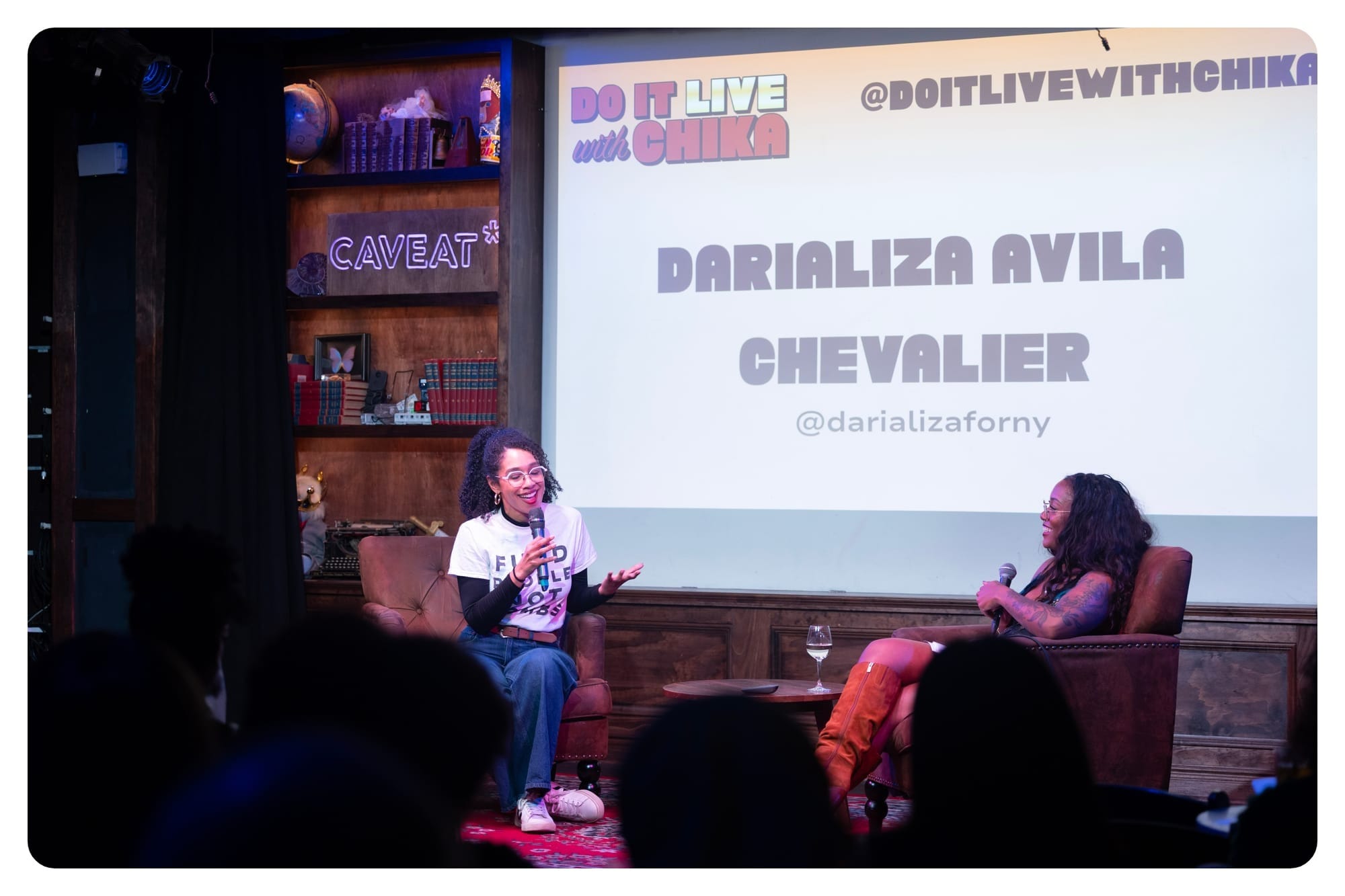
Editor Nikki: Bringing it back to Do It Live with Chika—I really see your peers as the late-night shows. I grew up watching David Letterman, Joan Rivers on The Tonight Show, Conan O'Brien, and Jimmy Kimmel, and it was always disappointing not seeing Black women represented or lasting in that space. Your show takes the traditional late-night structure and gives it a fresh twist. People keep saying late night is dying—how do you view entering that realm?
Chika: What’s fascinating is that while my show is very intentionally formatted as a late-night show, I actually see my creative peers in daytime television—shows like Oprah, Wendy Williams, and The Real. Black women are routinely given platforms in daytime, so bringing that energy and panel-style conversation into a late-night format feels like an important infiltration.
Late night feels "dead" mostly because of shifting attention spans, cord-cutting, and clip culture. That’s why I’m building out a YouTube channel and posting clips, while still protecting the live experience. You truly haven't seen the show unless you see it live. Even if you watch it on demand, the structure connects the opening panel directly to the closing panel—we interrogate a theme in the first half and gamify it in the second half. If you aren't in the room for the full arc, you miss how those two pieces lock together.
Editor Nikki: I also loved your "Woke Wendy" segment—I miss Wendy Williams and feel like we need her energy right now. Besides Wendy, who are your biggest inspirations for the show?
Chika: Like you mentioned earlier, Issa Rae is a huge one—so many Black women have said, "I’m going to build my own thing," and eventually the industry has to catch up. I also admire Ziwe. She uses a sharp satire that’s very different from my style—I’m much more earnest—and she's brilliant, almost like a Nathan Fielder figure.
What I love about Issa is that she feels like an everywoman, and I want to evoke that accessibility. I have a very specific ideology and explicitly leftist politics that you would never see on network TV, but a lot of political media isn't built to welcome people who don't already agree with the host. It’s really important to me to build a show where someone might think, "I’m not usually into that, but this is hilarious and now I'm actually thinking about it." Getting people thinking again is the whole point.
Editor Nikki: Let’s talk about community and support. As Black women in business, we often talk about how hard it is to build support systems while launching something new. How are you managing the workload right now?
Chika: I’m still figuring that out. I’m hyper-independent to a fault, and there’s a level of creative control I want right now because this show is my baby—so I have my hands in the writing, hosting, marketing, and production. I do have an amazing group of volunteers helping on the production and writing sides who I constantly bounce ideas off of, and I’m deeply grateful for them.
At the same time, I know doing everything myself isn't sustainable. I’m currently in the wilderness figuring out a values-aligned revenue and fundraising model. My goal is to grow a core team of showrunners and developers who are just as invested in the mission as I am, so the show gets the full resources it deserves.
Editor Nikki: Sharing your vision and figuring out ownership or equity is scary, especially when you make things look effortless. I don't know anything about production, and watching your show, it looked so easy and fun.
Chika: I think that’s a common trap for Black women—we project that we have everything completely together, so people assume, "Oh, she's got it," and don't realize we could use backup. I do have it handled, and I still welcome people having my back!
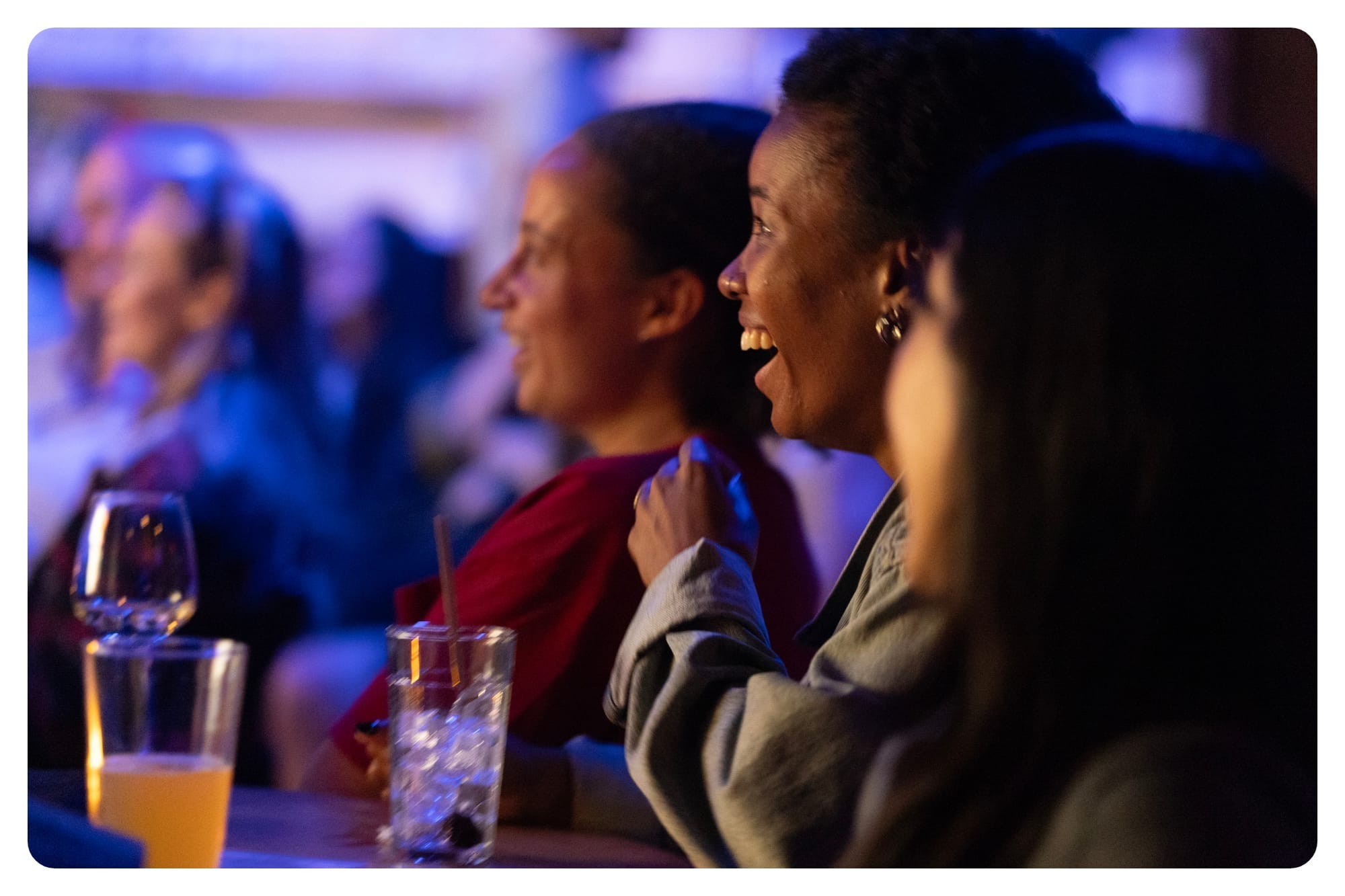
Editor Nikki: What is your vision for 2027? What should we be excited about?
Chika: Next year, we’re expanding to eight shows—two more than this year. I’m also excited to build collaborations with nonprofits. I came out of the nonprofit world, and while I deeply believe in their missions, many nonprofits struggle to communicate externally and engage everyday people. I know how to hold an audience’s attention, so I’m reaching out to organizations to bring the Do It Live model to their work—turning important causes into engaging live experiences that inspire people to get involved.
On a personal note, I quit my day job in August, so my biggest goal for 2027 is making that leap worth it—being able to fully support myself doing what I love.
Editor Nikki: Anything else you want the Culture Riot readers to know about Do It Live with Chika?
Chika: Come to the show and check it out! Honestly, I’m just really proud of what I’ve built. I always want to stay grounded and humble, because show business can make people lose touch with reality, but I also want to give myself credit for building something genuinely impressive. I’m excited to share it with the world and see where it goes next.