The Informant Sitting Beside You: How FBI Surveillance Has Evolved
COINTELPRO (Counterintelligence Program) taught Americans what can happen when government surveillance moves beyond investigating crimes and begins monitoring beliefs, associations and dissent.
What happens to a free society when surveillance becomes so easy that people begin censoring themselves?
J. Edgar Hoover FBI building, 1977 (Photo Credit, Library of Congress, Public Domain)
In 1972, NBC News reporter Carl Stern was waiting to use the only photocopier in a crowded Senate office when a staff member showed him a document bearing an unfamiliar heading: “COINTELPRO–New Left.”
The document had come from an FBI office in Media, Pennsylvania, burglarized the previous year by a small group of antiwar activists. Among the stolen files was a directive instructing an FBI agent to write anonymous letters to colleges in the Philadelphia area. The letters would urge administrators to bar Students for a Democratic Society and other antiwar and civil rights organizations from their campuses.
The program was created in 1956 under Director J. Edgar Hoover, and the Communist Party was its original target, but the program steadily expanded. Stern immediately wondered: By what authority was the FBI writing anonymous letters to influence the decisions of college administrators? That question led him into one of the most disturbing domestic surveillance programs in American history.
The Senate established a committee to investigate domestic surveillance of American citizens in 1975, chaired by Idaho senator Frank Church. The Church Committee’s work led to the 1978 passage of Foreign Intelligence Surveillance Act (FISA). Electronic surveillance inside the U.S. was permitted, but only for foreign intelligence purposes, not merely for one’s political beliefs.
Specifically, the Act provided for electronic surveillance of an American who could be considered to be an agent of a foreign power, including someone who “knowingly engages in clandestine intelligence gathering activities for or on behalf of a foreign power, which activities involve or may involve a violation of the criminal statutes of the United States” but that “no United States person may be considered a foreign power or an agent of a foreign power solely upon the basis of activities protected by the first amendment to the Constitution of the United States.”
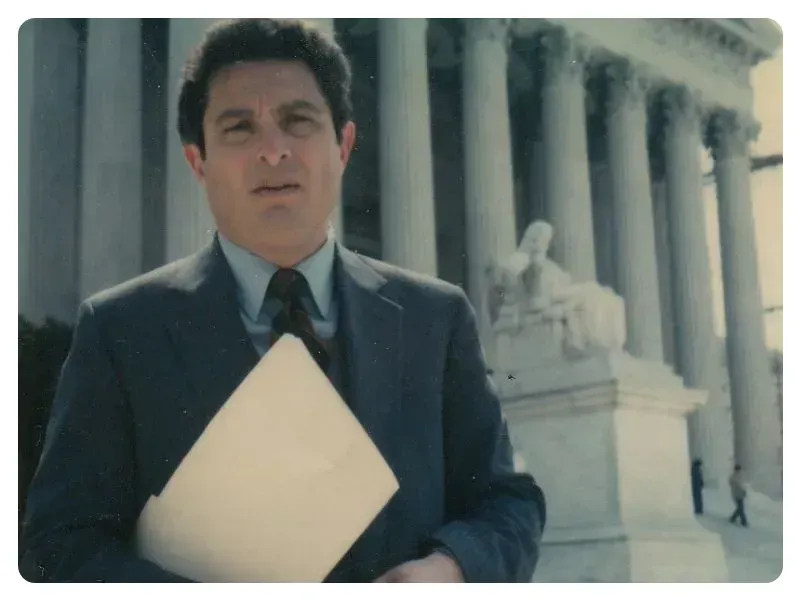
NBC Reporter, Carl Stern covering SCOTUS (Photo Credit U.S. National Archives, Public Domain)
When reporter Carl Stern approached the Department of Justice and the FBI, neither would discuss it. Months later, Acting FBI Director L. Patrick Gray sent Stern a personal note acknowledging that the program had existed but refusing to reveal more. He called it a “highly sensitive operation” and said disclosure could harm the FBI and national security.
In my interview with Stern, he told me that he believed the public might never know the full extent of COINTELPRO or how deeply it had entered people’s lives. What he uncovered matters today for a reason that goes well beyond history. COINTELPRO demonstrated what can happen when a government acquires the ability to watch its citizens largely beyond their knowledge and then decides for itself who deserves watching. The technology available to the FBI in the 1960s and 1970s seems primitive compared with what exists today. Back then, agents relied on wiretaps, microphones, informants, photographs, physical surveillance and paper files.
The FBI did not merely watch
Labor organizers, pacifists, civil rights leaders, Black activists, student organizers and opponents of the Vietnam War all came under scrutiny. The government described them as threats to national security. Many were Americans exercising their constitutional right to challenge government policy.
This post is for paying subscribers only
Sign up now and upgrade your account to read the post and get access to the full library of posts for paying subscribers only.