

“The right to live with your family is not a right that attaches to citizenship when immigration laws are in question.”
That is how Professor Helena Wray, an immigration-law scholar and co-leader of the Brexit Couples research project, explained one of Brexit’s consequences when I interviewed her. It is a startling thought for a country that spent years talking about taking back control: some British citizens discovered they could not easily live in Britain with the person they loved.
Before Brexit, an EU citizen working, studying or supporting themselves could generally settle in Britain under EU free-movement law. Their right to stay did not depend on their British partner. Many people already living in the UK retained comparable protections through the EU Settlement Scheme. But couples who missed that route now face Britain’s family immigration rules, unless they qualify for another visa.

The usual income threshold for sponsoring a partner is £29,000 a year. Wray estimates that visa applications and associated charges can exceed £12,000 over the normal five-year route to permanent settlement. Some couples in her research never applied because they could not meet the requirements. Even a successful application usually means renewals every two and a half years, no access to public funds for the migrant partner and a status that remains dependent on the relationship until settlement. Others described the rules as “an assault on their citizenship.”
Britain voted for more national control. Yet for these citizens, sovereignty meant less control over where they could build a family. And this was not a restriction invented for European partners: non-EU families had been dealing with it for years. Brexit simply brought more people under the same system.
Has Britain’s argument with Europe always concealed another, more personal argument: who actually gets to belong?
On June 23, 2016, 17.4 million people voted to leave the European Union. Britain formally withdrew on Jan. 31, 2020. Ten years after the referendum, more Britons believe leaving was a mistake and Prime Minister Andy Burnham is pursuing closer ties with the EU. But what, exactly, do they want back?
Missing Europe, on British Terms
In June 2026, YouGov found that 55% supported rejoining the EU. When asked about returning without Britain’s former exemptions from the euro and Schengen, support fell to 35%, while 43% opposed it. In France and Germany, 58% and 63% respectively welcomed a British return in principle, but majorities expected Britain to participate in the Union’s major common policies. Perhaps Britain does not want another marriage. Perhaps it just wants a less painful divorce.
A September survey found that 73% of Britons supported closer ties *without* joining the EU, its single market or customs union. People increasingly dislike the present arrangement, but that does not mean they agree on the alternative. The practical question is whether they want to live under common European rules again or simply want the economic advantages of cooperating with Europe.
But who is actually pushing for Britain to return? Not Burnham's Labour government, at least not yet. On Oct. 26, the prime minister ruled out rejoining during this Parliament, although he admitted he would like to see Britain back in the EU within his lifetime. Ed Davey's Liberal Democrats want Britain to rejoin the single market and a customs union, with full membership as a longer-term ambition. The Greens and Plaid Cymru support rejoining, while the SNP wants an independent Scotland inside the EU. Meanwhile, the Conservatives and Nigel Farage's Reform UK oppose a return. Outside Parliament, European Movement UK has launched its Heart of Europe 2036 campaign, aiming for EU membership by 2036, Even those who agree that Brexit needs fixing cannot agree on what fixing it should mean.
Eric Kalache, a French European affairs analyst interviewed by Culture Riot, regards Burnham’s opening as a serious gesture. He believes a full return should be put to a referendum. That is a question of democratic legitimacy, not an explicit legal condition of EU membership: voters who chose to leave should decide whether to return, and on what terms.
Who Had a Say and Who Didn’t
Ten years after Britain voted to take back control, Ali Haydor sometimes wishes he could hide his brown skin. Haydor moved from Bangladesh when he was five. He told Reuters in June that hostility he remembered from earlier decades was returning, with passengers questioning whether Muslims belonged in Britain. Imagine spending nearly forty years somewhere and still having to explain why you belong.
For some British minorities, the referendum made belonging feel less secure long before trade rules changed. Research on young British Muslims recorded one participant, Waqar, feeling alienated in the country where he was born. It is a particular kind of humiliation to be treated as a visitor in the place you call home.
But it would be dishonest to pretend all minorities voted Remain. Political scientist Neema Begum’s research explores why some Black and South Asian voters supported Leave, including tougher immigration controls. Experiences of migration and European privilege differed. EU freedom of movement did not give people arriving from Africa or South Asia equal access to Britain.
Even among EU passport holders, the experience was hardly equal. Census-based analysis identified around 800,000 ethnic-minority EU nationals living in Britain in 2021–22, making up approximately 15% of EU nationals.
Mihai Bica of the Roma Support Group says that hostility toward Roma people (an Indo-Aryan ethnic group dispursed throughout the continent) and Eastern Europeans intensified around the referendum. Some became frightened of speaking their own language in public. Later, the EU Settlement Scheme’s digital design created problems for people with limited English, insecure jobs or little access to technology. The rules seemed equal on paper, he said, but not everyone had an equal chance of navigating them.
Most EU citizens living in Britain could not vote in 2016, although Irish, Maltese and Cypriot citizens were exceptions. The advocacy organization the3million told Culture Riot Media that while it was “not looking to relitigate the Brexit referendum.” It wants EU citizens in Britain and British citizens in Europe heard in whatever negotiations come next.
The Rights That Stayed on Paper
The3million says digital immigration status has made life easier for some but left others struggling to prove they can work, live or travel. It warns that people can become “digitally excluded from being able to actively participate in society.”
Bica told me about a Roma widow in Liverpool whose husband had managed the family’s online immigration and benefits accounts. After he died of COVID-19, she could not access them. According to Bica, she lost welfare payments and was refused work because she could not prove her status. She had lost her husband. Then she had to prove she had the right to work in the country she called home.
Bica wants physical proof of status available to those who need it, alongside properly funded support. The3million warns that formal rights mean little when someone cannot demonstrate them at an airport or a workplace.
Wray makes a related point about families. If Britain rejoined the EU and free-movement rights were restored, many European partners could again live in Britain without navigating the costly family-visa route. But nothing could refund the money already spent or return years lost to separation. The changes would not automatically help non-EU partners; nor can the situation of every EU citizen be assumed identical. This is not only a story about heterosexual marriages. Cross-border rules affect LGBTQ+ partners too, and recognition of relationships still varies across Europe. EU membership alone cannot guarantee freedom from discrimination.
A Country Cannot Rewind the World
Britain’s Office for Budget Responsibility estimates that its post-Brexit trading relationship will leave long-term productivity around 4% lower than if it had remained in the EU. That is a forecast compared with an alternative future, not a measured four-percent collapse.
But Brexit did not invent regional inequality, housing shortages or weak public services. Rejoining would not fix decades of domestic political choices on its own. Britain’s mistake was not leaving a perfect institution. The EU has serious contradictions. The mistake was believing that leaving could bring back a world in which countries operated independently of the economic systems around them.
To compare, imagine a millennial in 2026 deciding to go back to cassette tapes. They can miss the click of a Walkman, the pleasure of buying a cassette album and the ritual of rewinding a favorite song. But need a working cassette player, shops that still sell tapes and people keeping the format alive. Society cannot be expected to abandon streaming audio because that one person misses having a Walkman.
Apply that principle to Brexit. There was something bold, even heroic, in the promise to stand alone. Britain remained sovereign while it belonged to the EU; independence was never the same thing as living without obligations to others. If Britain returns, it would not be proof that Europe is perfect. But it would serve as an acknowledgment that standing apart could not make interdependence disappear.
A country can leave an institution. It cannot leave the world that made such institutions necessary.
Europe Has a Say, Too
If Britain wants to rejoin, it can apply under Article 49 of the Treaty on European Union, negotiate its terms, secure agreement from member states and European Parliament consent, then complete ratification. Its former exemptions would not return automatically.
Kalache expects years of negotiations. A customs union or single-market arrangement would be a different, more limited choice, not the same as membership.
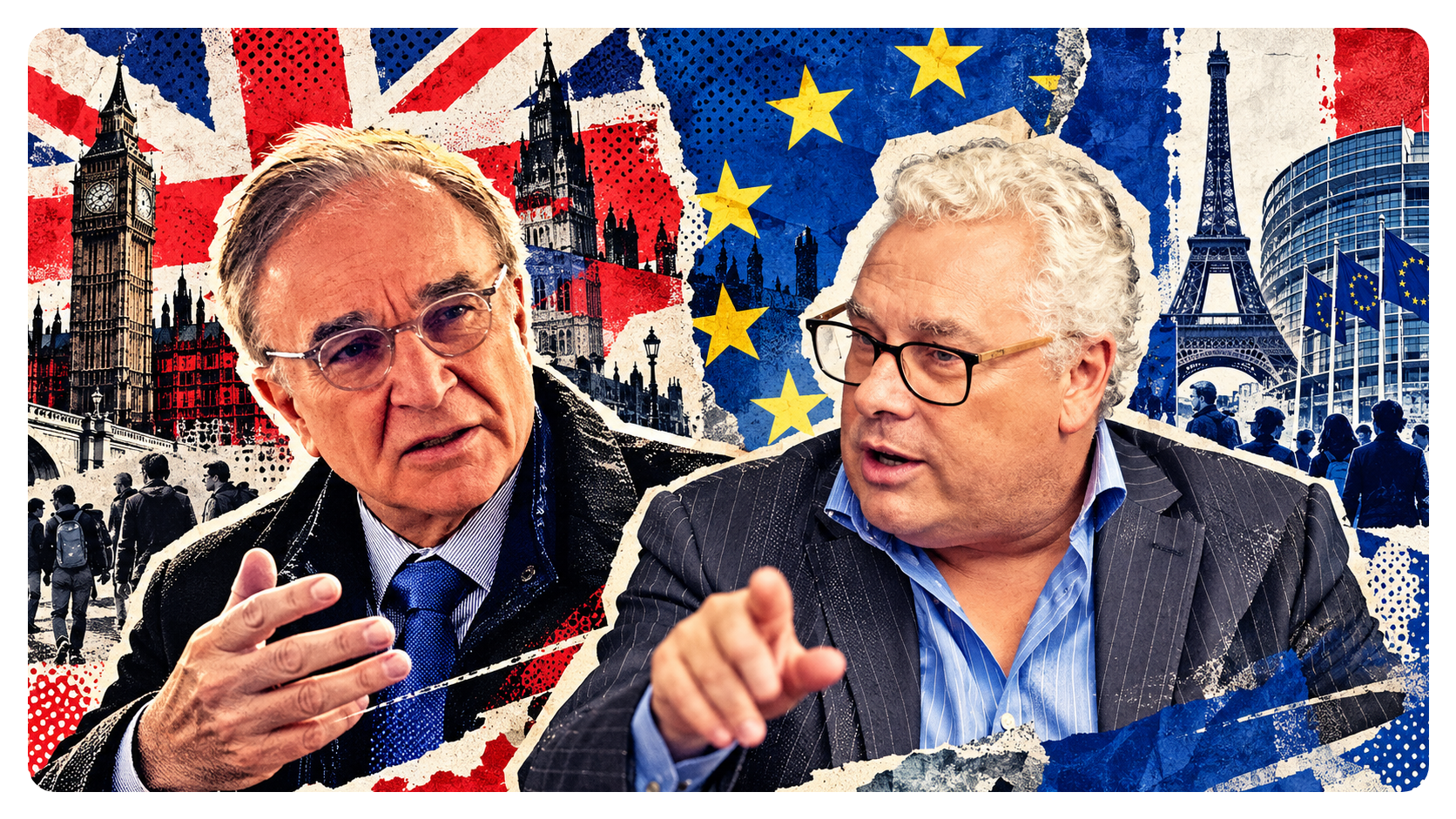
Emmanuel Dupuy, another French international affairs analyst interviewed by Culture Riot, sees possibilities that need not wait. Britain and its European neighbors already share interests in Ukraine, defense, energy security and student mobility. With Europe facing war and uncertainty over the US’s priorities, he argues, they have reasons to work together whether Britain rejoins or not. Dupuy also questions whether Brexit solved the migration problems invoked by its campaigners; disputes over Channel crossings continue.
The UK–EU summit planned for Nov. 20 in Brussels will test how far Burnham can take this cooperation. An October YouGov survey found 52% would vote to rejoin, against 27% who would stay out. But 64% wanted a referendum before any negotiated return. A change of public mood is not permission for just any deal.
There Is No Return Ticket to 2016
It’s compelling how differently people experienced the same vote. For some, it meant taking back control. For a British citizen with a European spouse, it could mean a visa they could not afford. For a Roma widow, a password between her and her livelihood. For a British Muslim driver, another demand to prove he belonged.
Britain might rejoin the EU or settle for a closer partnership. Neither outcome can return the years couples spent apart, repair neglected communities overnight or undo the suspicion directed at people who have lived there most of their lives.
Britain has spent ten years asking whether it belongs in Europe. When will it give the same attention to the people trying to belong in Britain?
Who gets to belong, and who gets to decide?


