
As the upcoming midterm elections draw near, U.S. citizens must know and understand their civil rights. What’s at stake is their social, political, economic, and medical wellbeing.
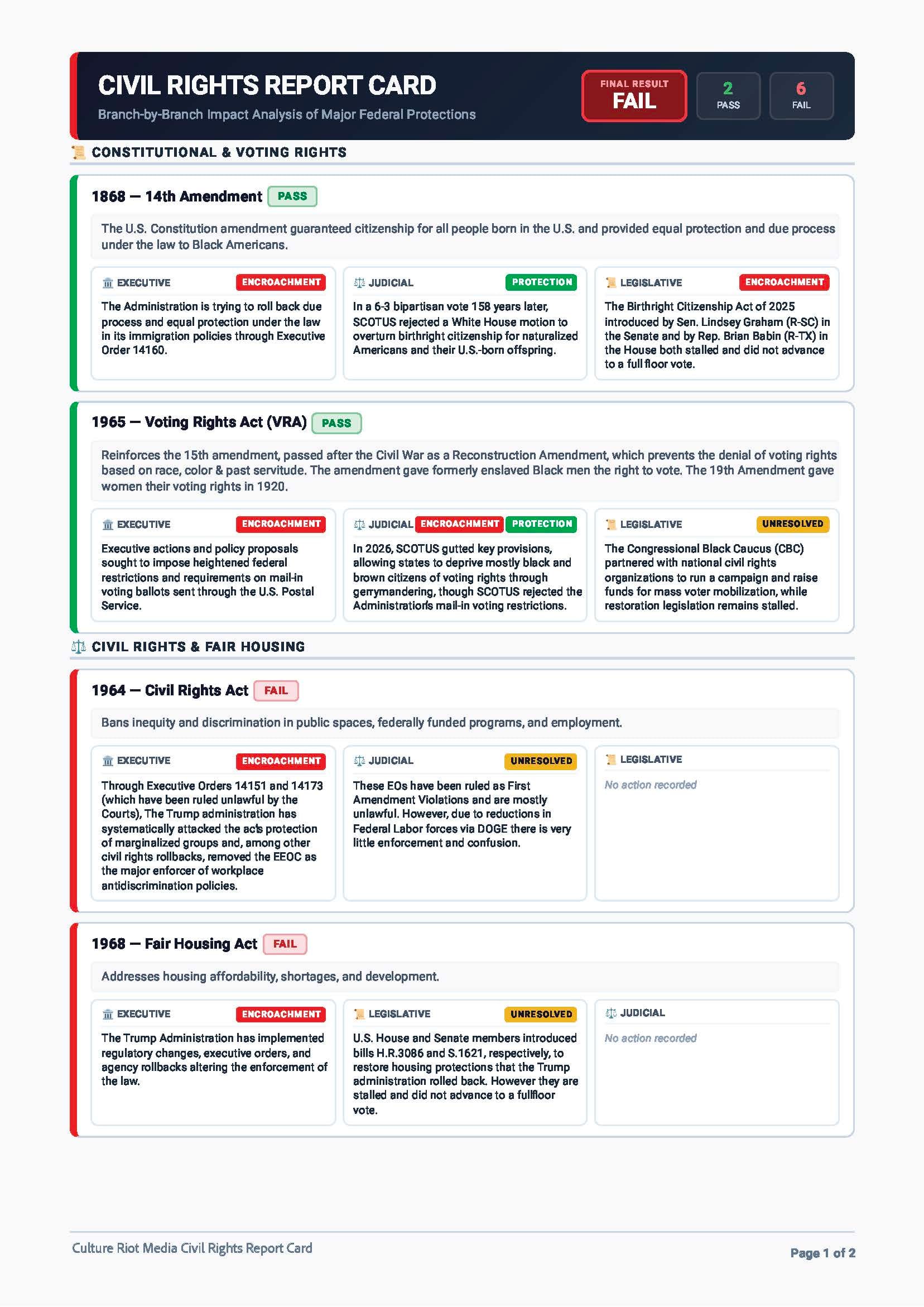
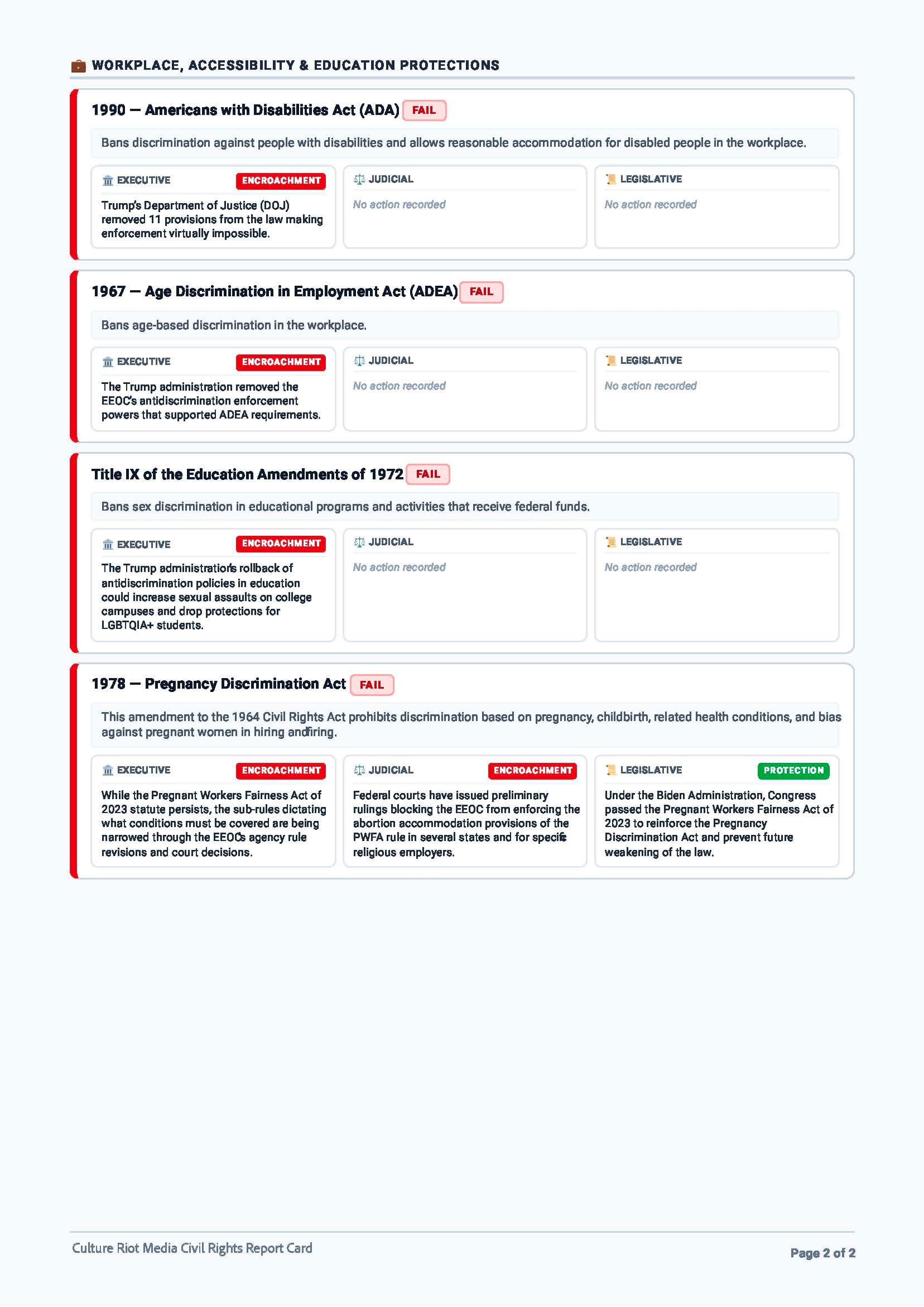
Take for example one of the Trump administration’s executive orders (EOs). The go-to federal government agency for fighting workplace discrimination was the Equal Employment Opportunity Commission (EEOC). The Civil Rights Act of 1964 banned unfair employment practices based on gender, race, national origin, disability, religion or sexual orientation, and named the agency the law’s enforcer.
But now the EEOC’s priority isn’t going after employers for discriminatory behavior, thanks to Executive Order 14173. Instead, the agency is enforcing merit-based employment to eliminate race and gender considerations in hiring.
There’s also bad news on the voting rights front. The U.S. Supreme Court (SCOTUS) struck down Section 4 of the Voting Rights Act of 1965 (VRA), which required states to get federal approval, or “preclearance,” before changing their voting procedures.
The High Court’s ruling triggered Republican-led states like Tennessee, Louisiana, Alabama, and South Carolina to redraw district lines to break up voting blocks of mostly black and brown residents who typically vote for Democrats. This strategy, known as gerrymandering, would strip the residents of their right to vote for the candidates of their choice.
Do these civil rights rollbacks mean total “gloom and doom”? No. Civil rights laws are still enforceable and backed by the U.S. Constitution. By contrast, a president’s EOs aren’t laws and can be overturned by the next officeholder. As for the SCOTUS, it crippled the VRA but can’t abolish federal laws, which only Congress passes.
In short, civil rights matter and knowing what they are is critical.
Civil rights are laws, pure and simple
Congress passed Civil rights legislation to protect people on U.S. soil from unequal treatment and discrimination.
However, people often confuse civil rights with civil liberties. The U.S. Constitution protects both. But civil liberties are inherent rights and freedoms like those spelled out in the Bill of Rights. Examples of civil liberties are freedom of speech, religion, and the press; freedom from torture and disappearance; the freedom to vote; and the right to life, due process, and a fair trial.
Civil liberties strive to keep the government from interfering with inherent freedoms. Civil rights rely on the government to pass and enforce laws to protect the people.
Who’s purging civil rights laws and who’s protecting them?
How the three branches of government — executive, judicial, and legislative — are upholding or overturning civil rights laws is a key issue for concerned voters in the November 3rd midterm elections.
Under the Trump administration, the main protectors of civil rights and personal freedoms are congressional Democrats and the SCOTUS’s three minority liberal justices. However, congressional Republicans outnumber Democrats by 53 to 45 in the Senate and by 218 to 214 in the House of Representatives. As a result, Democratic lawmakers lack the majority votes needed to protect civil rights from further harm.
Purging civil rights has been the Trump administration’s mission. It’s using EOs to undermine civil rights laws and override civil liberties. Republican lawmakers and the SCOTUS’s six conservative justices are generally in lockstep with the administration.
Here are three landmark SCOTUS decisions that helped set back civil rights:
- In a 6-3 majority vote, High Court conservatives granted the commander-in-chief immunity from prosecution when carrying out official duties. The ruling leaves civil rights laws at risk for extinction as the administration cracks down on equity and antidiscrimination policies.
- The SCOTUS’s 6-3 majority plundered the 1965 Voting Rights Act.
- The SCOTUS’s 6-3 majority ended abortion rights for women by overturning Roe v. Wade.
This statement from the New York Bar Association sums up the civil rights purge:
“The laws governing and protecting civil rights in the United States are being upended. Through a series of Executive Orders, the Trump administration is seeking to roll back civil rights protections for historically marginalized groups in direct contravention of Congress’s intent. The New York City Bar Association stands against the reversal of these critical rights and calls on Congress and state and local governments to do the same.”
How’s the government scoring on civil rights?
Given the critical threats to civil rights, how well is the U.S. government protecting the laws? Here’s a report card on how well government officials have done in the past 158 years, with a passing grade for championing civil rights and a failing grade for taking no groundbreaking action so far to protect them:
Is DEI driving the civil rights rollbacks?
Ending diversity, equity and inclusion (DEI) programs was central to the Trump administration’s civil rights rollbacks. The administration alleges that DEI unfairly places race and gender as the basis for hiring and promoting over merit.
On Day One in the White House, the administration ordered businesses, colleges and universities, law firms, government agencies, and federal contractors to end DEI practices. The EO mandating the change states that DEI is illegal and “causes inefficiencies, waste, and abuse” within organizations. Punishment for not complying can result in canceled government contracts and cuts to federally funded programs.
Besides the DEI purge, the administration’s most radical civil rights rollback was the massive firing of civil servants, including government officials; legal, scientific and law-enforcement experts; and high-level military personnel.
Within weeks after taking over the White House, the administration reduced 10% of the government’s workforce. Studies by the Pew Research Center show that 348,219 employees, either quit, retired or were fired.
Black women, many of them professionals, were the hardest hit. They made up 33% of those fired.
The National Women’s Law Center accuses the DEI purge of targeting mostly women and people of color in violation of civil rights laws. And Judge William H. Alsup of the Northern District of California even ruled the mass firings illegal.
Is health care a civil rights matter?
The Patient Protection and Affordable Care Act, also known as Obamacare, isn’t classified as a civil rights law, but it provided health care to millions of people who couldn’t afford it otherwise.
Along with the DEI purge, the Trump administration made sweeping cuts in health care benefits through the 2025 congressional budget bill. The cuts left more than 8 million Medicaid recipients without health care, according to Protect Our Care, a health care advocacy group.
The administration’s funding cuts to the U.S. Aid for International Development (USAID) nearly shut down the agency. USAID, which provides human services to impoverished people worldwide, had a $63 billion budget in 2023.
Is there a fix for biased cuts in health care? Researchers at the Harvard Kennedy School of Government who studied health care disparities among minority populations believe that strengthening the 1964 Civil Rights Act could be a remedy.
How does civil rights factor into the midterm elections?
Political candidates can’t guarantee lower food prices, affordable health care, higher wages, and cheaper goods, but voters can be sure of the following as they cast their ballots:
- Civil rights are legal mandates and can’t be rolled back without Congress’s consent.
- The SCOTUS may have the last word in civil rights disputes, but majority versus minority voting results could shift as justices join and leave the bench.
- Only Congress can pass and amend laws, control federal spending, and impeach and remove members of the other two branches of government.
- The Trump administration’s Office of Management and Budget shut down a database showing the public how the agency appropriates their tax dollars as mandated by Congress. But the D.C. Court of Appeals ordered the administration to repost the Public Apportionments Database and it complied.
- The U.S. government is charged with stepping in to protect people when their civil rights are under attack.


